Mondragon at 70: What the World's Largest Worker Cooperative Actually Proves
Founded in 1956, Mondragon brings together 70,000 worker-owners and posts a 97% survival rate over three decades. If the model is this solid, why does it remain marginal?
Mondragon at 70: What the World’s Largest Worker Cooperative Actually Proves
TL;DR: Founded in 1956 in a Basque village, Mondragon today comprises 81 autonomous cooperatives, some 70,000 worker-owners, and €11.2 billion in revenue. Its wage ratio: 1 to 9 between the lowest and highest salary — against 1 to 129 in a FTSE 100 company. In 2008, instead of laying workers off, 20% of employees took turns, drawn by lot, in a one-year paid leave at 80% of their salary. Of the 103 cooperatives founded between 1956 and 1986, 97% are still active. This is not a perfect model — its own president readily admits it. But it is “the least flawed in a crisis.” So why is this the first time you’ve heard about it?
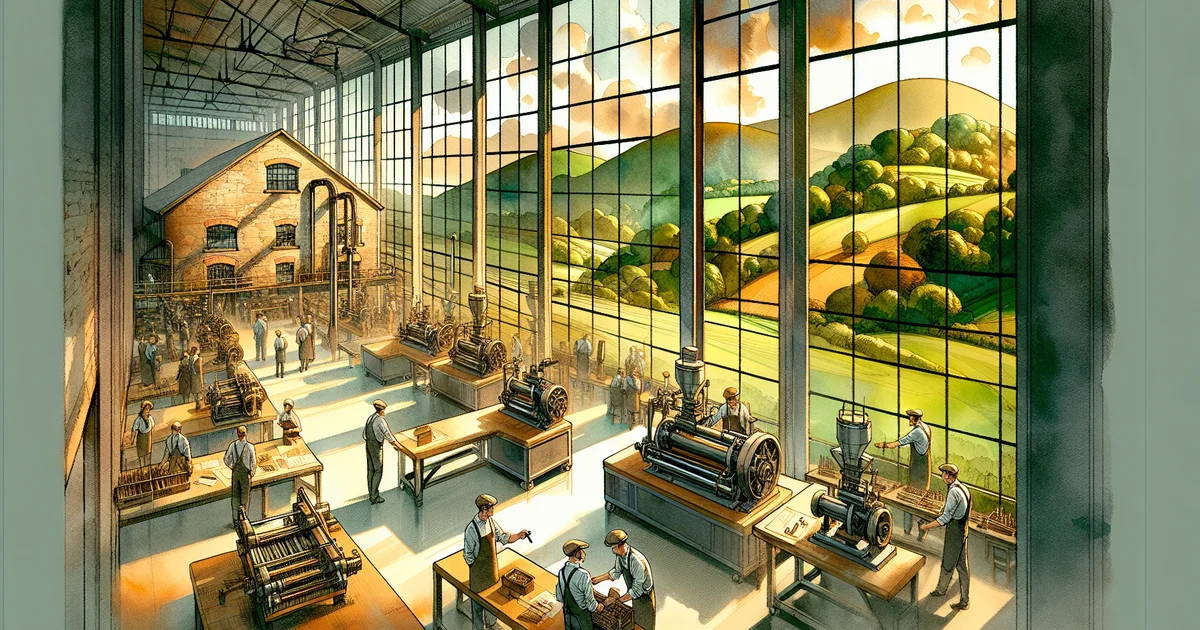
In 1956, José Maria Arizmendiarrieta, a Basque priest in a village devastated by the Spanish Civil War, convinced five young graduates to found not a conventional company, but a cooperative. ULGOR made gas cookers. Its workers were also its owners. Every major decision went through a council elected by the workers themselves.
Seventy years later, that marginal economic choice became the largest employer in the Basque Country and the tenth-largest private group in Spain. Mondragon operates in 37 countries, sells in more than 150, and maintains a structure that most business schools consider impossible at scale.
A Different Arithmetic
Let’s start with the numbers, because they challenge conventional certainties.
At Mondragon, the gap between the lowest and highest salary is 1 to 9. In a typical FTSE 100 company — the British index of the hundred largest market caps — that ratio is 1 to 129. In other words: the CEO of a large listed company earns in one day what an entry-level employee earns in a quarter. At Mondragon, that same CEO would earn the equivalent of nine times the lowest salary in their cooperative — and nothing more.
Does this constrain talent? The financial results answer: €11.213 billion in sales in 2024, a net profit of €632 million, and €1.692 billion in investments over five years. This is not an artisanal survival model. It is a competitive industrial growth model.
What “Owners” Really Means
Mondragon is not a company with a profit-sharing scheme sprinkled in at year-end. It is a federation of 81 autonomous cooperatives, each governed by an annual general assembly where every worker-member holds one vote — and exactly one.
Leaders are elected by members. Major strategies are voted on. Profits are partly redistributed to members’ individual accounts and partly reinvested in shared funds — research, training, solidarity between cooperatives in difficulty.
That last mechanism is the key to understanding what happened in 2008.
Crisis as a Test
The 2008 financial crisis hit the Basque Country as it did everywhere: collapsing demand, empty order books, pressure on employment.
At Mondragon, cooperatives under pressure did not lay workers off. Instead: 20% of workers took turns, drawn by lot, in a one-year paid leave at 80% of their salary, with the opportunity to train during that period. An organised solidarity, enshrined in the founding statutes — not an improvisation.
Of the 103 cooperatives created between 1956 and 1986, only 3 have closed. Three-decade survival rate: 97%.
Jose Maria Aldecoa, then president of the group, delivered a verdict worth quoting in full: “The co-operative model is absolutely flawed, but it has shown itself the least flawed in a crisis of values and models.”
That is a rare statement in the business world. A leader who acknowledges the flaws in his model while defending, with data, its relative superiority in the face of adversity.
Exception or Rule?
Mondragon is often presented as a cultural anomaly — too Basque, too singular in its history, impossible to replicate elsewhere. It’s a convenient argument. It deserves to be tested against global data.
According to the International Cooperative Alliance, 3 million cooperatives worldwide employ 280 million people — 10% of the global workforce. The top 300 generate $2.79 trillion in revenue. This is not a niche movement: it is the equivalent of the world’s seventh-largest economy, spread across every sector of activity.
And according to a meta-analysis by IZA World of Labor covering 102 samples and 56,984 companies, firms with employee ownership are twice as unlikely to go bankrupt as comparable companies over a twelve-year period. Layoff rates are less than half those observed in conventional firms. During the 2008–2012 crisis, Spanish and French cooperatives showed greater resilience than conventional businesses.
In other words, Mondragon is not an exception. It is the most visible case of a phenomenon documented at scale.
The Honest Question: Why Do They Remain Marginal?
If cooperatives create stable jobs, reduce wage inequality, withstand crises better, and generate competitive profits — why don’t they represent 50% of the global economy?
The answer has several layers, and none of them are flattering for the status quo.
Access to capital. Cooperatives cannot issue ordinary shares without diluting democratic governance. They rely more on self-financing and cooperative credit. Mondragon worked around this by creating its own cooperative bank in 1959. Most cooperatives don’t have that resource.
The governance challenge at scale. As a cooperative grows, maintaining genuine participation from all members becomes more complex. Mondragon chose to remain a federation of small autonomous entities rather than a monolithic structure — which preserves local governance but complicates global coordination.
Institutional ecosystems. Tax laws, accounting rules, financing norms were designed for joint-stock companies, over a century of accumulated lobbying and conventions. Cooperatives navigate a legal framework that has never truly been built for them.
These obstacles are real. They are not natural — they are the result of political decisions. Other decisions could change them.
What This Changes — and for Whom
If you work in a structure that feels arbitrary in its decisions, opaque in its pay, indifferent to your life beyond billed hours — the cooperative model is not a utopia. It is a documented, measured, sometimes imperfect option that has existed at scale for 70 years.
If you consume: consumer, energy, and housing cooperatives work on the same logic. In Europe, 743 citizen energy cooperatives are members of the REScoop network — from solar production to collective ownership of wind turbines.
If you are starting a business in France: the SCOP status (Société Coopérative de Production) allows workers to be majority shareholders. This is not an ideological model — it’s an ordinary legal form.
What You Can Do
- Look for cooperatives near you. Energy, food, housing, financial services — there are probably some in your region.
- If you are starting a business, look into the SCOP status in France — workers are majority shareholders.
- If you are in a large company, employee share ownership programmes are a partial and imperfect version of this model, but a measurable one.
The next time someone tells you “humans are fundamentally self-interested and capitalism merely reflects our nature” — think of José Maria Arizmendiarrieta, his five apprentices, and the 70,000 people who, seventy years later, still co-own their tools in the hills of the Basque Country.
Sources
- MONDRAGON Corporation — About us — verified 2026-05-03
- Mondragon: sales of €11.213 billion — Co-operative News — verified 2026-05-02
- Mondragon study highlights salary ratio 1:9 — ICA — verified 2026-05-03
- Mondragón Co-operative Corporation — Participedia — verified 2026-05-02
- Facts and figures — ICA — verified 2026-05-02
- Does employee ownership improve performance? — IZA World of Labor — verified 2026-05-02
- REScoop network — citizen energy cooperatives — verified 2026-05-03
See also: Mondragon: the salary ratio that puzzles economists
Pass it on
If this article resonated with you, share it with someone around you. In a world where bad news travels fast, it is just as valuable to spread what is going well. Passing on something inspiring is already a form of action.
Comments
Leave a comment
Did this article inspire a thought, a question, or a reaction? Share it below — all comments are reviewed before publication.


