An evidence-based optimism outlet

Imagining a desirable future

The future is not written. Women and men are already building a different world — in their farms, laboratories, communes. Bloomii documents these paths.

"We are not looking for easy optimism that ignores obstacles — that would be wishful thinking. We seek a desirable future that is plausible, given the real constraints of the economy, politics, and human nature."

Latest articles

All articles →

Latest briefs

All briefs →
ArticleWell-being & Health

The four-day week: what the data actually proves

From Iceland to the United Kingdom, rigorously measured trials show that reducing working hours can increase productivity, health and team loyalty — without losing a single euro in revenue.

Read →
ArticleWell-being & Health

Social Prescribing: when your GP prescribes singing, gardening, and volunteering

What if your doctor prescribed a choir class instead of an anxiolytic? In the United Kingdom, this is no longer a utopian idea — it is national health policy, with 3,000 dedicated professionals and solid clinical evidence behind it.

Read →
ArticleEconomy & Commons

GDP Doesn't Measure Wellbeing: Amsterdam Replaced It — and 100 Cities Followed

In April 2020, during lockdown, Amsterdam adopted a new economic framework: doughnut economics. A 21-dimension compass that measures whether an economy is genuinely healthy — neither too little, nor too much.

Read →
ArticleLiving Together

Buying without speculating: the quiet revolution of community land trusts

For 40 years, community land trusts have proved that a family can own a home at an affordable price — and that it stays affordable for whoever comes next. A mechanism born in Burlington, flourishing in Brussels, now arriving in France.

Read →
ArticleEcology & Regeneration

Rights of Nature: When Rivers Become Legal Persons

Since 2008, a quiet legal revolution has been transforming our relationship to the natural world. From rivers to forests, dozens of countries now recognise entire ecosystems' right to exist, to be protected — and to argue their case before a court.

Read →
ArticleEconomy & Commons

Porto Alegre, 1989: When Residents Decided Where Public Money Went

In 1989, a Brazilian city handed part of its budget directly to residents. Within a decade: running water in 98% of homes, health budget tripled, infant mortality down 20%. Since then, 11,500 cities have followed.

Read →
ArticleEthical Technology

Technology Designed to Last: Fairphone and the Modular Design Bet

Keeping your smartphone for 7 years rather than 3 reduces its annual carbon footprint by 44%. Fairphone proves it. And the circular economy movement shows this logic can transform an entire industry.

Read →
ArticleEcology & Regeneration

Cities That Are Replanting Their Forests: The Data-Backed Story

Medellín lowered its temperature by 2°C in three years. Paris has planted 129,000 trees since 2020. A 2026 meta-analysis shows that urban forests already cool 914 million people — with important nuances about what they can and cannot do.

Read →
ArticleEthical Technology

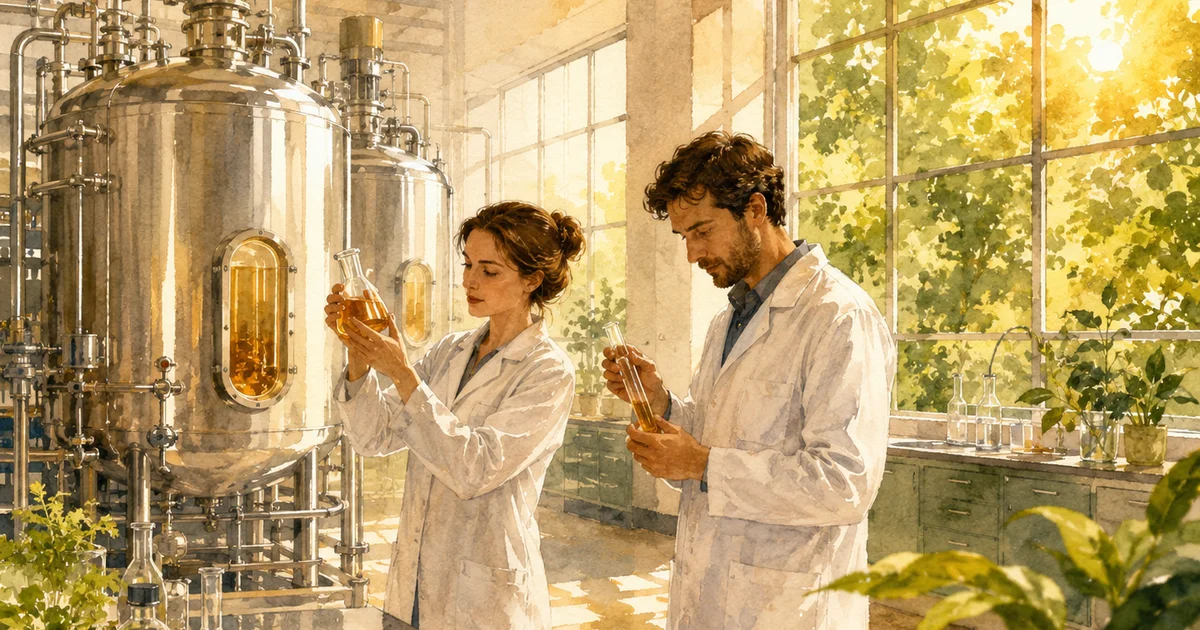
Precision Fermentation Is Already in Your Cheese

80% of the world's rennet has been produced without animals since 1990. The same technology promises dairy proteins with 91–97% fewer emissions — with important nuances on costs, European regulation and patent concentration.

Read →
ArticleLiving Together

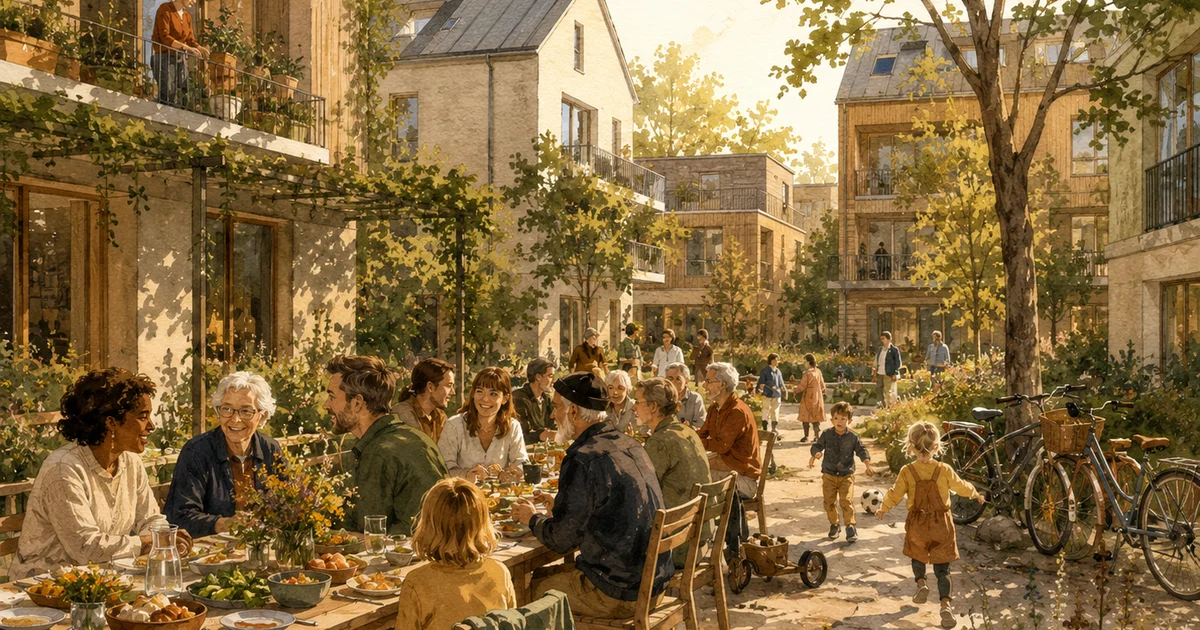
In Oslo, 40% of Housing Is Participatory. This Is Not a Utopia.

Individualism as inevitable, cohousing reserved for idealists? Across Europe, tens of thousands of people prove otherwise — with measured data on loneliness, health and life satisfaction.
Read →
ArticleEthical Technology

Citizen microgrids: village produces 5× its energy

Wildpoldsried: 500% energy surplus, $7M yearly. Schoonschip & Enercoop show how citizen microgrids work — and the conditions that make them last.

Read →
ArticleWell-being & Health

Eco-Anxiety Is Not Your Enemy

59% of young people describe themselves as extremely worried about the climate — and those who feel this anxiety engage more politically than those who don't. Science is redefining eco-anxiety: not a pathology to cure, but an adaptive signal to transform into collective force.

Read →
ArticleEconomy & Commons

Universal Basic Income: What 40 Years of Data Actually Tell Us

From Alaska to Finland, through Stockton and Kenya, six rigorously documented experiments contradict the myth of dependency. Recipients work more, invest more, and do better.

Read →
BriefEthical Technology

AlphaFold mapped over 214 million proteins — conservation scientists are finally using it

The same AI that predicted the shape of nearly every known protein is now helping researchers understand the molecular biology of endangered species — from honeybee immunity proteins to poorly studied organisms with no prior structural data.

Read →
ArticleEconomy & Commons

France's Social and Solidarity Economy: A Quiet Transformation Already Underway

The Social and Solidarity Economy accounts for 10% of French employment and brings together 2.6 million people. From cooperatives to mutual health insurers, the economic alternative isn't a utopia — it's already a discreet pillar of the French economy.

Read →
ArticleEthical Technology

96% of Commercial Software Contains Code That Volunteers Wrote for Free

Wikipedia, Linux, OpenStreetMap: three projects built by millions of people with no single owner. Harvard puts their replacement value at $8.8 trillion. The data demolish the idea that open collaboration cannot work at scale.

Read →
ArticleWell-being & Health

Social Isolation Kills — And the Remedies Exist

A meta-analysis of 3.4 million people confirms it: social isolation increases mortality risk by 29%. But large-scale programmes — social prescribing in the UK, moais in Okinawa, village movements in the US — prove this epidemic is reversible.

Read →
ArticleLiving Together

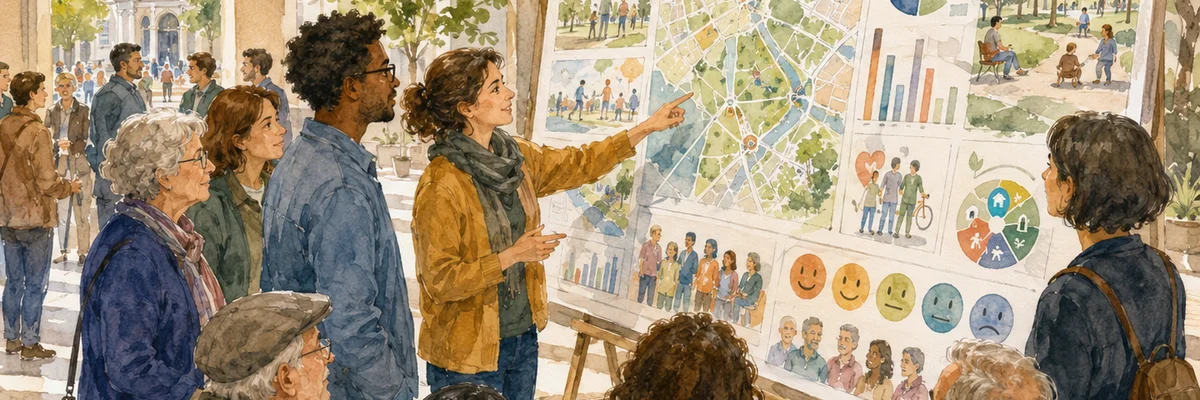
Participatory budgeting: water 75% to 98% in 10 years

Porto Alegre: water access 75%→98% in 10 years; health budgets nearly tripled. 7,000+ cities now use participatory budgeting — data over dogma.

Read →
BriefBien-être & santé

The Village Movement: ageing at home, surrounded by a community that organises itself

Born in Boston in 2002, the Village Movement offers a simple model: neighbours organise collectively to enable older adults to stay at home, with mutual services and a solidarity network. The movement has spread to hundreds of cities across the United States.

Read →
BriefÉcologie & Régénération

Loos-en-Gohelle: a former mining town covers 90% of its public energy needs from solar

A mining town in Pas-de-Calais marked by unemployment and slag heaps, Loos-en-Gohelle installed 2,600 m² of solar panels on its municipal buildings. Since 2021, these installations cover 90% of public energy needs and generate €50,000 of energy per year.

Read →
BriefTechnologie éthique

Precision fermentation: proteins without animals, with 91 to 97% fewer greenhouse gas emissions

An ISO 14067-certified lifecycle analysis shows that proteins produced by precision fermentation generate 91 to 97% fewer greenhouse gas emissions than conventional dairy proteins, with 96 to 99% less water consumption.

Read →
BriefVivre ensemble

Pontevedra pedestrianised its centre in 1999 — zero road deaths since 2011

In 1999, the Spanish city of Pontevedra pedestrianised 300,000 m² of its town centre and reduced traffic from 80,000 to 7,000 vehicles per day. Result: CO2 emissions down more than 70%, no fatal accident since 2011, and 12,000 new residents attracted to the city.

Read →
BriefBien-être & santé

Moai Okinawa: How a Circle of Five Friends Extends Your Life

The moai okinawa tradition: in Okinawa, about half the population participates in a moai — an informal mutual support group, some of which have lasted more than 90 years. Okinawan women live on average 8 years longer than American women. Social connection is probably one of the decisive factors.

Read →
BriefÉcologie & Régénération

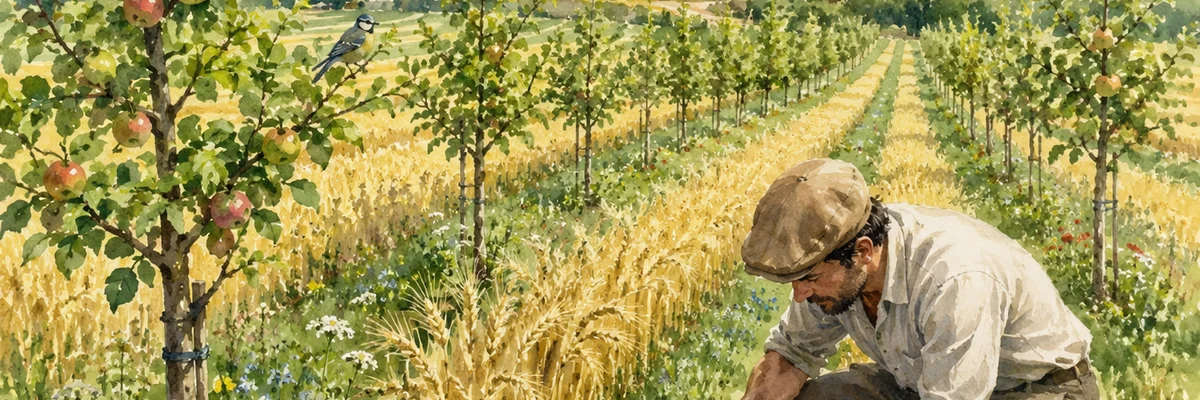
Agroforestry sequesters 1.22 tonnes of carbon per hectare per year

A study published in 2024 in Frontiers in Sustainable Food Systems demonstrates that seven agroecological practices all increase carbon sequestration in soils and vegetation — with agroforestry leading at 1.22 t C/ha/yr.

Read →
BriefÉconomie & communs

The Eusko, Europe's leading local currency, exceeds 6.5 million transactions

With 4.4 million euskos in circulation and 6.5 million transactions in 2024, the local currency of the French Basque Country stands as Europe's largest — and a real-world laboratory for short supply chains.

Read →
ArticleWell-being & Health

Nature as Medicine: What Science Now Measures

Contact with nature is often relegated to 'alternative medicine'. Clinical data tell a different story: 21% less cortisol in 10 to 30 minutes, strengthened immune cells, reduced mortality risk. Here is the state of the evidence.

Read →
BriefÉconomie & communs

743 citizen cooperatives: Europe builds its democratic energy network

REScoop.eu, the European federation of citizen energy cooperatives, brings together 743 member organisations in more than 28 countries. These structures allow ordinary citizens to become co-owners of their local renewable energy production.

Read →
BriefBien-être & santé

Six governments are building an economy that measures happiness

The WEGo (Wellbeing Economy Governments) partnership, launched in 2018, brings together Scotland, Iceland, New Zealand, Wales, Finland and Canada around a shared goal: developing public policies that measure wellbeing rather than growth alone.

Read →
BriefÉconomie & communs

Having a purpose beyond profit makes companies more resilient

A B Lab Europe study covering 7 European countries shows that between 2019 and 2022, 76% of certified B Corp companies recorded revenue growth, compared to 60% of non-certified companies. During the COVID crisis, they were more likely to maintain their activity.

Read →
BriefWell-being & Health

Bhutan's Gross National Happiness Index: 50 Years of Results

The bhutan happiness index — known as the Gross National Happiness (GNH) Index — has, since the 1970s, measured national happiness across 9 domains and 33 indicators. The index rose from 0.743 to 0.781 (2010–2022). Discover what half a century of alternative GDP shows.

Read →

You're up to date.

Discover more:

Install Bloomii on iPhone or iPad

In Safari, tap Share, then Add to Home Screen.