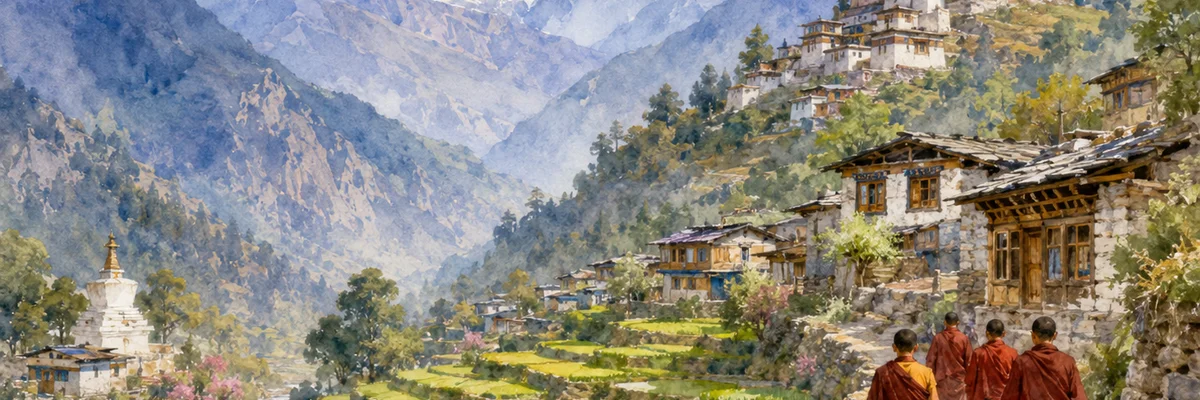
Bhutan has been measuring national happiness for 50 years — here are the results
Since the 1970s, Bhutan has replaced GDP with a Gross National Happiness Index covering 9 domains and 33 indicators. The index rose from 0.743 to 0.781 between 2010 and 2022. This small kingdom is experimenting in practice with what other countries debate in theory.
In the 1970s, King Jigme Singye Wangchuck of Bhutan asked a simple question: “Is gross national happiness more important than gross domestic product?” It was not a metaphor. It was a political choice.
Since then, this small Himalayan kingdom of 800,000 inhabitants has developed and applied a Gross National Happiness Index (GNH Index) covering 9 domains — psychological wellbeing, health, time use, education, cultural diversity, good governance, community vitality, ecological diversity and living standards — measured through 33 indicators.
The latest reading, published by the Oxford Poverty & Human Development Initiative (OPHI) from a survey of 11,052 Bhutanese citizens, shows an index that rose from 0.743 in 2010 to 0.781 in 2022. In 2022, 38.6% of the population were “extensively happy” and 45.5% happy to a more partial degree — broadly doing well, with identified room for improvement in certain domains.
What makes Bhutan valuable to the global debate is not its perfection — it is its persistence. This country has been measuring the wellbeing of its citizens in a multidimensional way for five decades. The results guide budget allocations, social policies and development choices.
A different compass leads to a different destination.
Further reading: Governing Differently: When GDP Makes Way for Well-being