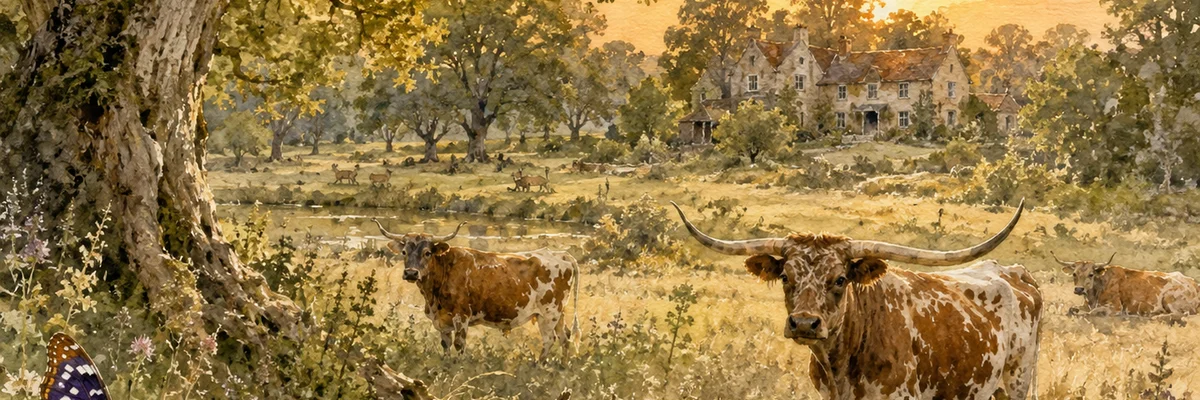
Knepp Estate: 20 years of rewilding, +916% breeding birds
In twenty years, an exhausted agricultural estate in Sussex has become one of the UK's greatest biodiversity hotspots. The January 2026 assessment is striking: +916% breeding birds, +871% dragonflies, 62 nightingale males where there were only 9.
In 2001, Isabella Tree and Charlie Burrell made a radical decision: to abandon intensive farming on their 1,400 hectares in Sussex and let nature decide what came next. No restoration plan, no manual reseeding — semi-wild animals (longhorn cattle, Tamworth pigs, deer, Exmoor ponies) reconfigured the landscape at their own pace.
The assessment of the estate’s southern block, published in January 2026, is staggering. Between 2007 and 2025: +916% abundance in breeding birds, +132% richness in bird species, +871% dragonflies and damselflies, +107% butterfly species. Singing nightingales went from 9 males in 1999 to 62 in 2025. “The trend is clearly positive and continues to increase year on year,” notes Fleur Dobner, the estate’s ecologist.
What makes Knepp valuable is not only the figures — it is the method. No injection of concrete, no ten-billion-pound programme. Just space, herbivores, and time. “We went from exhausted land to one of the most significant biodiversity hotspots in the UK,” summarises Isabella Tree.
The lesson of Knepp comes down to one sentence: nature knows how to heal itself, if you give it the opportunity.
Further reading: The Rewilding Revolution: How Europe Is Bringing Its Territories Back to Life