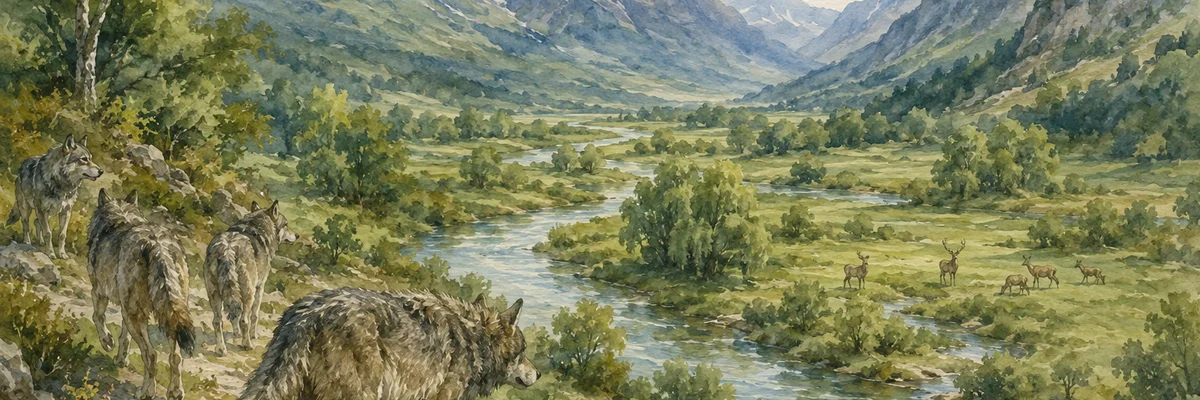
Yellowstone: wolves multiplied riparian forest volume fifteenfold
A study published in 2025 in Global Ecology and Conservation measures the effect of wolf reintroduction at Yellowstone: the volume of riparian willow crowns increased by 1,500% between 2001 and 2020. The trophic cascade is one of the strongest ever documented.
In 1995, sixteen wolves were released into Yellowstone National Park after a 70-year absence. That figure seems modest. What happened next is not.
A study published in 2025 in Global Ecology and Conservation by William Ripple and Robert Beschta measured the state of 25 riparian sites between 2001 and 2020. The result: the volume of willow crowns in riparian zones grew by 1,500% — a trophic cascade whose strength surpasses 82% of cases documented in the global literature.
The mechanism is indirect. Wolves do not eat willows; they alter the behaviour of deer, which now avoid riverbanks where their vulnerability is greatest. Freed from intensive grazing, willows, poplars and alders were able to regrow. Watercourses stabilised. Beavers returned. Raptors followed.
“Our results underscore the power of predators as ecosystem architects,” summarises Ripple. “The restoration of wolves transformed parts of Yellowstone, benefiting not only willows but also aspens, alders and berry shrubs.”
A simple lesson: sometimes the best ecological intervention is to put back what we removed.
Further reading: The Rewilding Revolution: How Europe Is Bringing Its Territories Back to Life