Sea otters and kelp: a keystone species restoring underwater forests and storing carbon
In central California, the return of sea otters increased kelp forest cover by 57.6% and raised the carbon storage of these ecosystems by 5.3%. A study published in PLOS Climate in 2024 documents this cascade mechanism — one animal, two climate benefits.
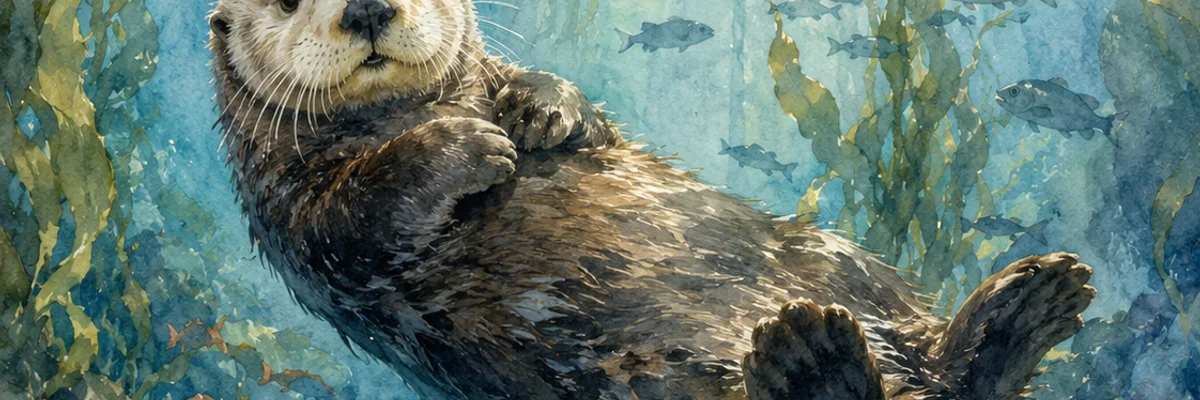
The sea otter weighs around thirty kilograms and spends most of its life floating on its back, eating sea urchins. This seemingly unremarkable behaviour is in fact one of the best examples of what ecologists call a keystone species: its presence or absence restructures the entire ecosystem.
A study published in 2024 in PLOS Climate by Nicholson et al. documented this mechanism with precision. In central California, areas where otters have rebuilt their populations show kelp forest cover 57.6% higher than otter-free areas. The mechanism is direct: without a predator, sea urchins proliferate and devour the kelp until a marine desert remains. With the otter, the forest returns.
The climate implications are concrete. Carbon storage in these kelp forests increased by 5.3% — a rise from 556.5 to 586.0 kilotonnes of CO₂ equivalent. Kelp fixes carbon dioxide and oxygenates coastal waters; the otter is its natural guardian.
Protecting or reintroducing a keystone species activates a cascading restoration mechanism. No infrastructure is required — only the removal of the pressures that drove the original population to collapse.
Further reading: The Ocean is Regenerating: The Numbers Nobody Cites