Briefs
Positive signals — short, sourced, concrete.
-
AlphaFold mapped over 214 million proteins — conservation scientists are finally using it
The same AI that predicted the shape of nearly every known protein is now helping researchers understand the molecular biology of endangered species — from honeybee immunity proteins to poorly studied organisms with no prior structural data.
Read → -
The Village Movement: ageing at home, surrounded by a community that organises itself
Born in Boston in 2002, the Village Movement offers a simple model: neighbours organise collectively to enable older adults to stay at home, with mutual services and a solidarity network. The movement has spread to hundreds of cities across the United States.
Read → -
Loos-en-Gohelle: a former mining town covers 90% of its public energy needs from solar
A mining town in Pas-de-Calais marked by unemployment and slag heaps, Loos-en-Gohelle installed 2,600 m² of solar panels on its municipal buildings. Since 2021, these installations cover 90% of public energy needs and generate €50,000 of energy per year.
Read → -
Precision fermentation: proteins without animals, with 91 to 97% fewer greenhouse gas emissions
An ISO 14067-certified lifecycle analysis shows that proteins produced by precision fermentation generate 91 to 97% fewer greenhouse gas emissions than conventional dairy proteins, with 96 to 99% less water consumption.
Read → -
Pontevedra pedestrianised its centre in 1999 — zero road deaths since 2011
In 1999, the Spanish city of Pontevedra pedestrianised 300,000 m² of its town centre and reduced traffic from 80,000 to 7,000 vehicles per day. Result: CO2 emissions down more than 70%, no fatal accident since 2011, and 12,000 new residents attracted to the city.
Read → -
Moai Okinawa: How a Circle of Five Friends Extends Your Life
The moai okinawa tradition: in Okinawa, about half the population participates in a moai — an informal mutual support group, some of which have lasted more than 90 years. Okinawan women live on average 8 years longer than American women. Social connection is probably one of the decisive factors.
Read → -
Agroforestry sequesters 1.22 tonnes of carbon per hectare per year
A study published in 2024 in Frontiers in Sustainable Food Systems demonstrates that seven agroecological practices all increase carbon sequestration in soils and vegetation — with agroforestry leading at 1.22 t C/ha/yr.
Read → -
The Eusko, Europe's leading local currency, exceeds 6.5 million transactions
With 4.4 million euskos in circulation and 6.5 million transactions in 2024, the local currency of the French Basque Country stands as Europe's largest — and a real-world laboratory for short supply chains.
Read → -
743 citizen cooperatives: Europe builds its democratic energy network
REScoop.eu, the European federation of citizen energy cooperatives, brings together 743 member organisations in more than 28 countries. These structures allow ordinary citizens to become co-owners of their local renewable energy production.
Read → -
Six governments are building an economy that measures happiness
The WEGo (Wellbeing Economy Governments) partnership, launched in 2018, brings together Scotland, Iceland, New Zealand, Wales, Finland and Canada around a shared goal: developing public policies that measure wellbeing rather than growth alone.
Read → -
Having a purpose beyond profit makes companies more resilient
A B Lab Europe study covering 7 European countries shows that between 2019 and 2022, 76% of certified B Corp companies recorded revenue growth, compared to 60% of non-certified companies. During the COVID crisis, they were more likely to maintain their activity.
Read → -
Bhutan's Gross National Happiness Index: 50 Years of Results
The bhutan happiness index — known as the Gross National Happiness (GNH) Index — has, since the 1970s, measured national happiness across 9 domains and 33 indicators. The index rose from 0.743 to 0.781 (2010–2022). Discover what half a century of alternative GDP shows.
Read → -
1,000 organisations, 20% of global packaging: circular plastics gaining ground
In November 2024, the Ellen MacArthur Foundation counted more than 1,000 organisations — including companies representing 20% of global plastic packaging and more than 50 signatory governments — committed to a shared vision: that plastic never becomes waste.
Read → -
Universal basic income in Kenya: 200 villages, no evidence of idleness
Preliminary results from the world's largest study on universal basic income, published in December 2023 by GiveDirectly, show no disincentive effect on work: recipients invest more, become more entrepreneurial and earn more.
Read → -
Yellowstone: wolves multiplied riparian forest volume fifteenfold
A study published in 2025 in Global Ecology and Conservation measures the effect of wolf reintroduction at Yellowstone: the volume of riparian willow crowns increased by 1,500% between 2001 and 2020. The trophic cascade is one of the strongest ever documented.
Read → -
Sea otters and kelp: a keystone species restoring underwater forests and storing carbon
In central California, the return of sea otters increased kelp forest cover by 57.6% and raised the carbon storage of these ecosystems by 5.3%. A study published in PLOS Climate in 2024 documents this cascade mechanism — one animal, two climate benefits.
Read → -
Shinrin-yoku: the forest as recognised medicine — NK cells and anti-cancer proteins
Recognised as a discipline of preventive medicine in Japan since 2004, forest bathing (shinrin-yoku) is documented by precise physiological measurements: increased NK cell activity and anti-cancer proteins, lower blood pressure, anxiety and depression scores. Cortisol effects remain uncertain according to the most recent evidence.
Read → -
Changing your diet at 20 can add more than 10 years to your life expectancy
A study published in PLOS Medicine in 2022 modelled the impact of a sustained dietary change on life expectancy. Switching from a typical Western diet to an optimal diet at age 20 extends life by 10.7 years for women and 13 years for men.
Read → -
280 million jobs, 3 million businesses: cooperatives, a quietly global model
According to the World Cooperative Monitor 2025 of the International Cooperative Alliance, 280 million people — 10% of the world's active population — work in a cooperative. One billion people are members. This alternative economic model is in fact one of the most widespread on Earth.
Read → -
Keeping your phone for 5 years instead of 3 cuts its annual carbon footprint by 31%
The Fraunhofer IZM Institute measured the environmental impact of the Fairphone 4 according to its length of use. Result: five years of use reduces the annual carbon footprint by 31%, and seven years reduces it by 44%. Repairability is not a detail — it is a climate strategy.
Read → -
Everyday cycling: -10% mortality and $435 billion in potential health benefits
If every city raised its cycling network to Copenhagen's level, the global health benefits would amount to around $435 billion per year. That is the finding of a study published in 2025 in PNAS, covering 11,587 cities in 121 countries.
Read → -
AlphaFold: 200 million protein structures given to global science
Determining a protein's structure used to take months, even years. AlphaFold does it in seconds — and makes the results freely available to 500,000 researchers in 190 countries. A turning point for biology and medicine for the most vulnerable.
Read → -
Knepp Estate: 20 years of rewilding, +916% breeding birds
In twenty years, an exhausted agricultural estate in Sussex has become one of the UK's greatest biodiversity hotspots. The January 2026 assessment is striking: +916% breeding birds, +871% dragonflies, 62 nightingale males where there were only 9.
Read → -
Doughnut economics: from academic idea to 50 cities in five years
By April 2025, more than 50 local authorities around the world had integrated doughnut economics into their policies. This conceptual framework — proposed by Kate Raworth in 2012 — is moving out of books and into city plans.
Read → -
Beavers are back in England
In March 2025, Eurasian beavers were officially released into the wild in England for the first time in centuries. This small mammal transforms wetlands far better than any civil engineering project.
Read → -
Two hours a week in nature: a documented threshold for wellbeing
A meta-analysis published in 2025 in Behavioral Sciences — covering 78 studies — confirms that 120 minutes of exposure to nature per week are associated with better perceived health and significantly higher wellbeing. The threshold is achievable, even in cities.
Read → -
Circular economy in Europe: 12.2% achieved, 24% targeted by 2030
In 2024, 12.2% of materials consumed in Europe came from recycling or reuse. The EU's objective is to reach 24% by 2030. The European Environment Agency warns: without a major acceleration, the EU will not meet the target.
Read → -
300 million eyes on nature
In August 2025, iNaturalist passed the milestone of 300 million observations of wild species, submitted by 4.3 million users. This global network of amateur naturalists has become one of the largest occurrence databases of living organisms — and a major resource for science.
Read → -
In Iceland, the shorter working week has become the norm
A follow-up report published in October 2024 confirms it: 86% of Iceland's active population now works fewer hours, or has the right to do so. This is no longer a pilot — it is a public policy that has become firmly established.
Read → -
Mondragon: the salary ratio that puzzles economists
A study by the International Cooperative Alliance published in late April 2026 highlights a striking figure: at Mondragon, the gap between the lowest and highest salary is 1 to 9. In a FTSE 100 company, it is 1 to 129.
Read → -
Porto Alegre: when residents decide how their city is built
In 1989, Porto Alegre handed part of its municipal budget to citizens. Within nine years, water and sewage connections rose from 75% to 98% of households. The model has since been replicated in more than 11,500 cities around the world.
Read → -
Europe adopts a binding law to restore nature
In July 2024, the European Nature Restoration Regulation came into force — a world first. For the first time, a major economic area has legally committed to repairing the ecosystems it has degraded: 20% of land, 25,000 km of rivers, 3 billion trees.
Read → -
Solar energy: from 414% more expensive than coal to 56% cheaper in thirteen years
In 2010, solar electricity cost 414% more than fossil alternatives. By 2023, it had become 56% cheaper. This complete reversal, documented by IRENA in September 2024, follows a predictable logic: Wright's Law.
Read →



AlphaFold mapped over 214 million proteins — conservation scientists are finally using it
The same AI that predicted the shape of nearly every known protein is now helping researchers understand the molecular biology of endangered species — from honeybee immunity proteins to poorly studied organisms with no prior structural data.
Read →
The Village Movement: ageing at home, surrounded by a community that organises itself
Born in Boston in 2002, the Village Movement offers a simple model: neighbours organise collectively to enable older adults to stay at home, with mutual services and a solidarity network. The movement has spread to hundreds of cities across the United States.
Read →
Loos-en-Gohelle: a former mining town covers 90% of its public energy needs from solar
A mining town in Pas-de-Calais marked by unemployment and slag heaps, Loos-en-Gohelle installed 2,600 m² of solar panels on its municipal buildings. Since 2021, these installations cover 90% of public energy needs and generate €50,000 of energy per year.
Read →
Precision fermentation: proteins without animals, with 91 to 97% fewer greenhouse gas emissions
An ISO 14067-certified lifecycle analysis shows that proteins produced by precision fermentation generate 91 to 97% fewer greenhouse gas emissions than conventional dairy proteins, with 96 to 99% less water consumption.
Read →
Pontevedra pedestrianised its centre in 1999 — zero road deaths since 2011
In 1999, the Spanish city of Pontevedra pedestrianised 300,000 m² of its town centre and reduced traffic from 80,000 to 7,000 vehicles per day. Result: CO2 emissions down more than 70%, no fatal accident since 2011, and 12,000 new residents attracted to the city.
Read →
Moai Okinawa: How a Circle of Five Friends Extends Your Life
The moai okinawa tradition: in Okinawa, about half the population participates in a moai — an informal mutual support group, some of which have lasted more than 90 years. Okinawan women live on average 8 years longer than American women. Social connection is probably one of the decisive factors.
Read →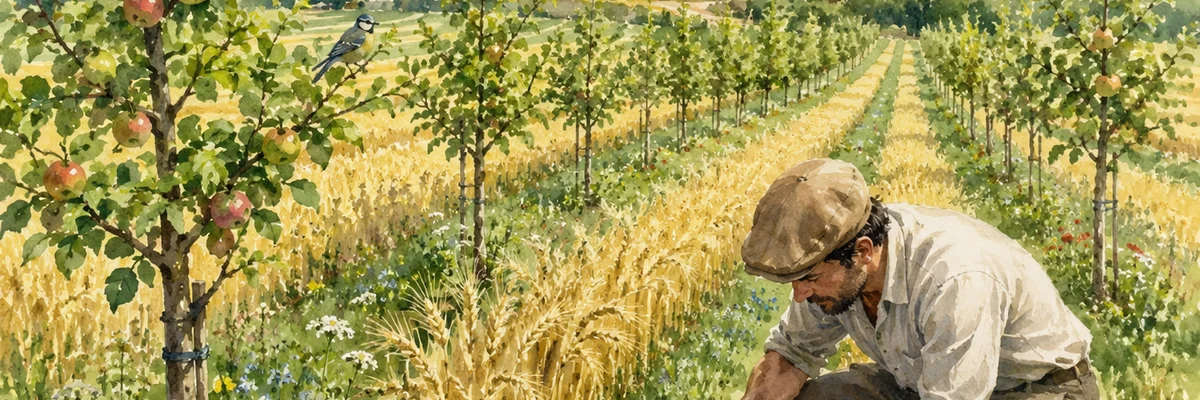
Agroforestry sequesters 1.22 tonnes of carbon per hectare per year
A study published in 2024 in Frontiers in Sustainable Food Systems demonstrates that seven agroecological practices all increase carbon sequestration in soils and vegetation — with agroforestry leading at 1.22 t C/ha/yr.
Read →
The Eusko, Europe's leading local currency, exceeds 6.5 million transactions
With 4.4 million euskos in circulation and 6.5 million transactions in 2024, the local currency of the French Basque Country stands as Europe's largest — and a real-world laboratory for short supply chains.
Read →
743 citizen cooperatives: Europe builds its democratic energy network
REScoop.eu, the European federation of citizen energy cooperatives, brings together 743 member organisations in more than 28 countries. These structures allow ordinary citizens to become co-owners of their local renewable energy production.
Read →
Six governments are building an economy that measures happiness
The WEGo (Wellbeing Economy Governments) partnership, launched in 2018, brings together Scotland, Iceland, New Zealand, Wales, Finland and Canada around a shared goal: developing public policies that measure wellbeing rather than growth alone.
Read →
Having a purpose beyond profit makes companies more resilient
A B Lab Europe study covering 7 European countries shows that between 2019 and 2022, 76% of certified B Corp companies recorded revenue growth, compared to 60% of non-certified companies. During the COVID crisis, they were more likely to maintain their activity.
Read →
Bhutan's Gross National Happiness Index: 50 Years of Results
The bhutan happiness index — known as the Gross National Happiness (GNH) Index — has, since the 1970s, measured national happiness across 9 domains and 33 indicators. The index rose from 0.743 to 0.781 (2010–2022). Discover what half a century of alternative GDP shows.
Read →
1,000 organisations, 20% of global packaging: circular plastics gaining ground
In November 2024, the Ellen MacArthur Foundation counted more than 1,000 organisations — including companies representing 20% of global plastic packaging and more than 50 signatory governments — committed to a shared vision: that plastic never becomes waste.
Read →
Universal basic income in Kenya: 200 villages, no evidence of idleness
Preliminary results from the world's largest study on universal basic income, published in December 2023 by GiveDirectly, show no disincentive effect on work: recipients invest more, become more entrepreneurial and earn more.
Read →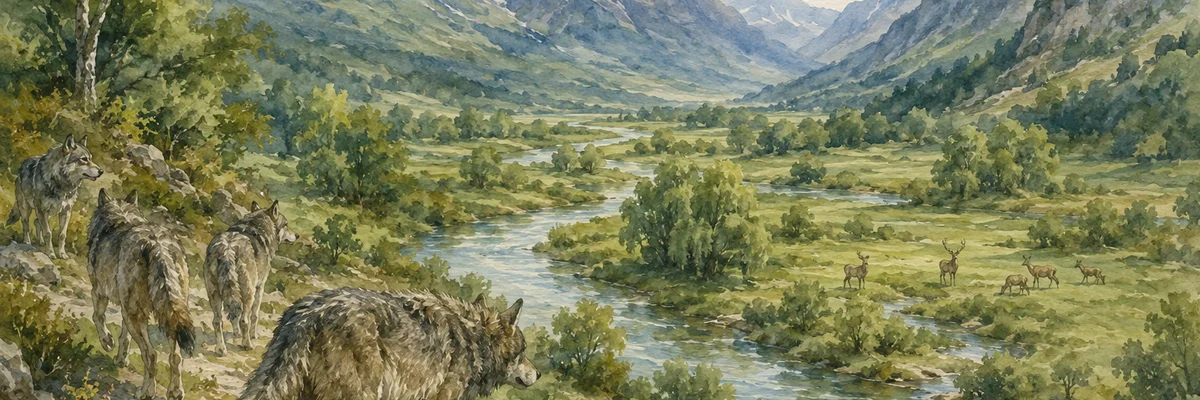
Yellowstone: wolves multiplied riparian forest volume fifteenfold
A study published in 2025 in Global Ecology and Conservation measures the effect of wolf reintroduction at Yellowstone: the volume of riparian willow crowns increased by 1,500% between 2001 and 2020. The trophic cascade is one of the strongest ever documented.
Read →
Sea otters and kelp: a keystone species restoring underwater forests and storing carbon
In central California, the return of sea otters increased kelp forest cover by 57.6% and raised the carbon storage of these ecosystems by 5.3%. A study published in PLOS Climate in 2024 documents this cascade mechanism — one animal, two climate benefits.
Read →
Shinrin-yoku: the forest as recognised medicine — NK cells and anti-cancer proteins
Recognised as a discipline of preventive medicine in Japan since 2004, forest bathing (shinrin-yoku) is documented by precise physiological measurements: increased NK cell activity and anti-cancer proteins, lower blood pressure, anxiety and depression scores. Cortisol effects remain uncertain according to the most recent evidence.
Read →
Changing your diet at 20 can add more than 10 years to your life expectancy
A study published in PLOS Medicine in 2022 modelled the impact of a sustained dietary change on life expectancy. Switching from a typical Western diet to an optimal diet at age 20 extends life by 10.7 years for women and 13 years for men.
Read →
280 million jobs, 3 million businesses: cooperatives, a quietly global model
According to the World Cooperative Monitor 2025 of the International Cooperative Alliance, 280 million people — 10% of the world's active population — work in a cooperative. One billion people are members. This alternative economic model is in fact one of the most widespread on Earth.
Read →
Keeping your phone for 5 years instead of 3 cuts its annual carbon footprint by 31%
The Fraunhofer IZM Institute measured the environmental impact of the Fairphone 4 according to its length of use. Result: five years of use reduces the annual carbon footprint by 31%, and seven years reduces it by 44%. Repairability is not a detail — it is a climate strategy.
Read →
Everyday cycling: -10% mortality and $435 billion in potential health benefits
If every city raised its cycling network to Copenhagen's level, the global health benefits would amount to around $435 billion per year. That is the finding of a study published in 2025 in PNAS, covering 11,587 cities in 121 countries.
Read →
AlphaFold: 200 million protein structures given to global science
Determining a protein's structure used to take months, even years. AlphaFold does it in seconds — and makes the results freely available to 500,000 researchers in 190 countries. A turning point for biology and medicine for the most vulnerable.
Read →
Knepp Estate: 20 years of rewilding, +916% breeding birds
In twenty years, an exhausted agricultural estate in Sussex has become one of the UK's greatest biodiversity hotspots. The January 2026 assessment is striking: +916% breeding birds, +871% dragonflies, 62 nightingale males where there were only 9.
Read →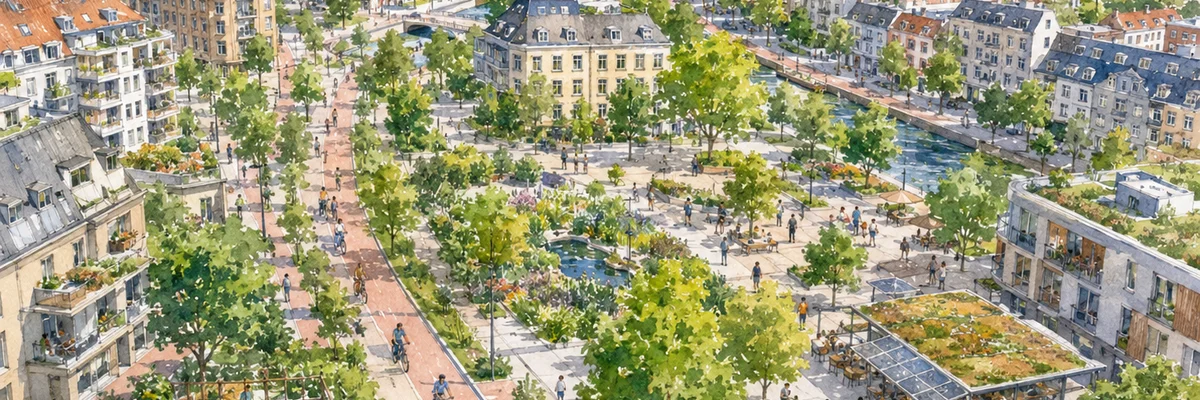
Doughnut economics: from academic idea to 50 cities in five years
By April 2025, more than 50 local authorities around the world had integrated doughnut economics into their policies. This conceptual framework — proposed by Kate Raworth in 2012 — is moving out of books and into city plans.
Read →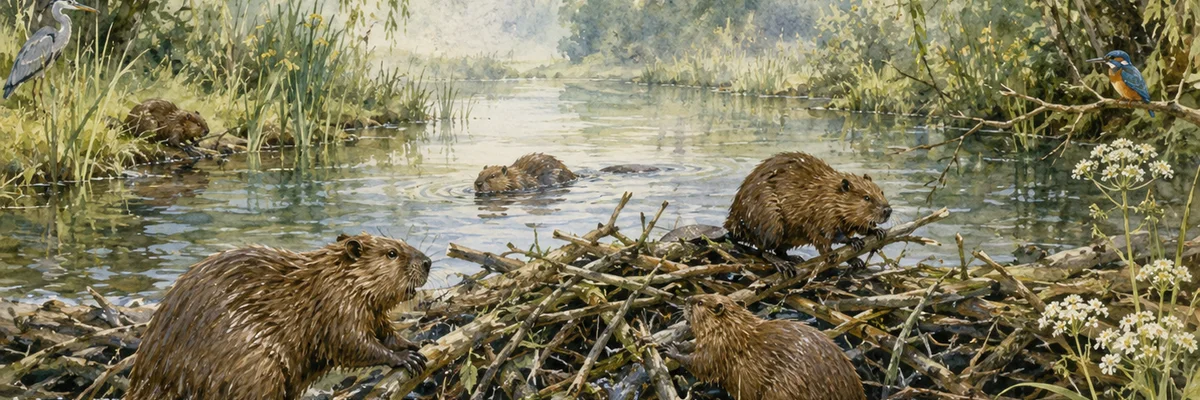
Beavers are back in England
In March 2025, Eurasian beavers were officially released into the wild in England for the first time in centuries. This small mammal transforms wetlands far better than any civil engineering project.
Read →
Two hours a week in nature: a documented threshold for wellbeing
A meta-analysis published in 2025 in Behavioral Sciences — covering 78 studies — confirms that 120 minutes of exposure to nature per week are associated with better perceived health and significantly higher wellbeing. The threshold is achievable, even in cities.
Read →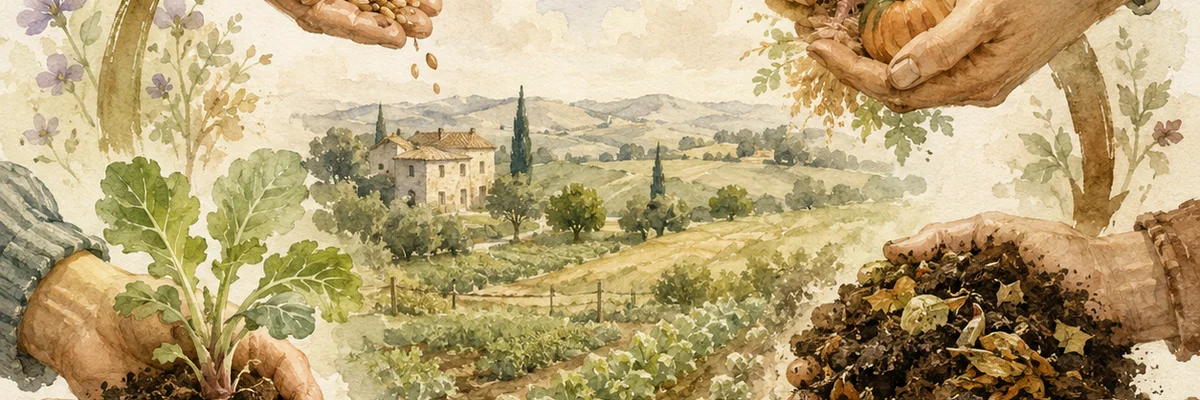
Circular economy in Europe: 12.2% achieved, 24% targeted by 2030
In 2024, 12.2% of materials consumed in Europe came from recycling or reuse. The EU's objective is to reach 24% by 2030. The European Environment Agency warns: without a major acceleration, the EU will not meet the target.
Read →
300 million eyes on nature
In August 2025, iNaturalist passed the milestone of 300 million observations of wild species, submitted by 4.3 million users. This global network of amateur naturalists has become one of the largest occurrence databases of living organisms — and a major resource for science.
Read →
In Iceland, the shorter working week has become the norm
A follow-up report published in October 2024 confirms it: 86% of Iceland's active population now works fewer hours, or has the right to do so. This is no longer a pilot — it is a public policy that has become firmly established.
Read →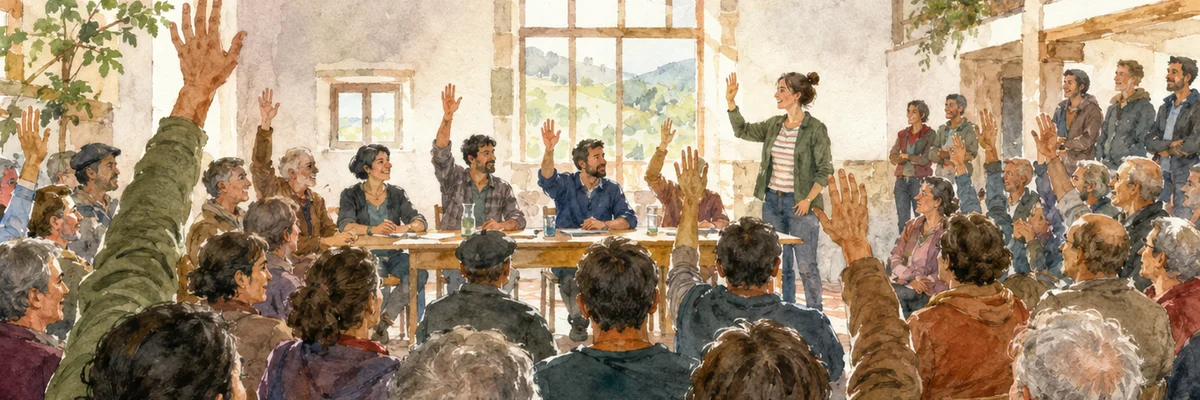
Mondragon: the salary ratio that puzzles economists
A study by the International Cooperative Alliance published in late April 2026 highlights a striking figure: at Mondragon, the gap between the lowest and highest salary is 1 to 9. In a FTSE 100 company, it is 1 to 129.
Read →You're up to date.
Discover more: