Articles
-
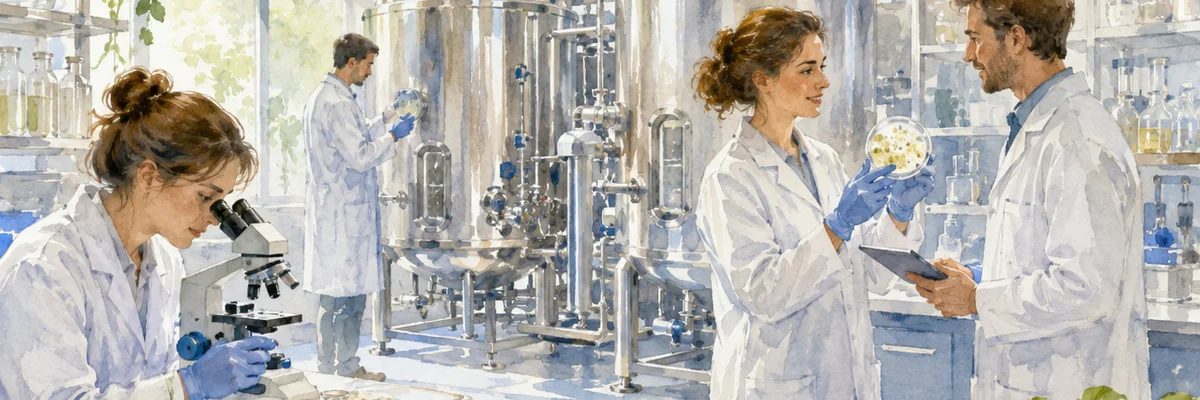
Precision Fermentation Is Already in Your Cheese
80% of the world's rennet has been produced without animals since 1990. The same technology promises dairy proteins with 91–97% fewer emissions — with important nuances on costs, European regulation and patent concentration.
Read article → -
Citizen Microgrids: When a Neighbourhood Generates Its Own Energy
Community microgrids for neighborhoods: in Wildpoldsried, Schoonschip, and through Enercoop, villages and neighbourhoods are producing their own electricity — and reinvesting the revenue locally. Nine thousand communities are already doing this across Europe. Real conditions, documented limits.
Read article → -
96% of Commercial Software Contains Code That Volunteers Wrote for Free
Wikipedia, Linux, OpenStreetMap: three projects built by millions of people with no single owner. Harvard puts their replacement value at $8.8 trillion. The data demolish the idea that open collaboration cannot work at scale.
Read article → -
"Patents save lives": what open-source biology proves otherwise
AlphaFold made 200 million protein structures freely accessible within months. 100,000 researchers work in the open on the diseases that kill the poorest. Here is how open-source biology is reinventing who benefits from science.
Read article → -
The AI That Counts Species: When Artificial Intelligence Serves the Living World
300 million biodiversity observations collected by citizens. Algorithms tracking poachers in real time. 200 million protein structures free for the entire planet. The same technology powering our news feeds can also protect life — if we choose what it serves.
Read article → -
The Energy Transition: The Curve That Changes Everything
In 2010, solar electricity cost 414% more than fossil fuels. In 2023, it costs 56% less. This reversal, documented by IRENA, is the most important economic fact of the decade — and one of the least known.
Read article →


Briefs
-
AlphaFold mapped over 214 million proteins — conservation scientists are finally using it
The same AI that predicted the shape of nearly every known protein is now helping researchers understand the molecular biology of endangered species — from honeybee immunity proteins to poorly studied organisms with no prior structural data.
Read → -
Precision fermentation: proteins without animals, with 91 to 97% fewer greenhouse gas emissions
An ISO 14067-certified lifecycle analysis shows that proteins produced by precision fermentation generate 91 to 97% fewer greenhouse gas emissions than conventional dairy proteins, with 96 to 99% less water consumption.
Read → -
1,000 organisations, 20% of global packaging: circular plastics gaining ground
In November 2024, the Ellen MacArthur Foundation counted more than 1,000 organisations — including companies representing 20% of global plastic packaging and more than 50 signatory governments — committed to a shared vision: that plastic never becomes waste.
Read → -
Keeping your phone for 5 years instead of 3 cuts its annual carbon footprint by 31%
The Fraunhofer IZM Institute measured the environmental impact of the Fairphone 4 according to its length of use. Result: five years of use reduces the annual carbon footprint by 31%, and seven years reduces it by 44%. Repairability is not a detail — it is a climate strategy.
Read → -
AlphaFold: 200 million protein structures given to global science
Determining a protein's structure used to take months, even years. AlphaFold does it in seconds — and makes the results freely available to 500,000 researchers in 190 countries. A turning point for biology and medicine for the most vulnerable.
Read → -
300 million eyes on nature
In August 2025, iNaturalist passed the milestone of 300 million observations of wild species, submitted by 4.3 million users. This global network of amateur naturalists has become one of the largest occurrence databases of living organisms — and a major resource for science.
Read → -
Solar energy: from 414% more expensive than coal to 56% cheaper in thirteen years
In 2010, solar electricity cost 414% more than fossil alternatives. By 2023, it had become 56% cheaper. This complete reversal, documented by IRENA in September 2024, follows a predictable logic: Wright's Law.
Read →